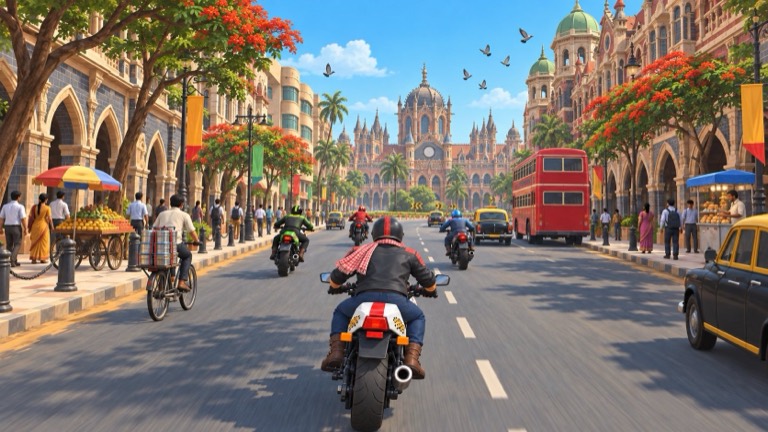
A racing game set in India has to ride like India. That means the traffic, the animals, the people and the unwritten rules of the road, and the first rule is that India keeps left.
Left lane, right overtake
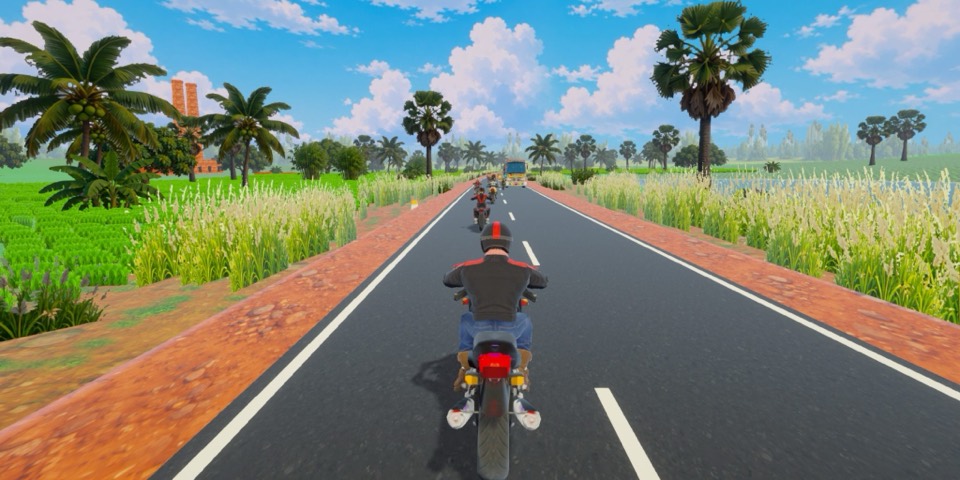
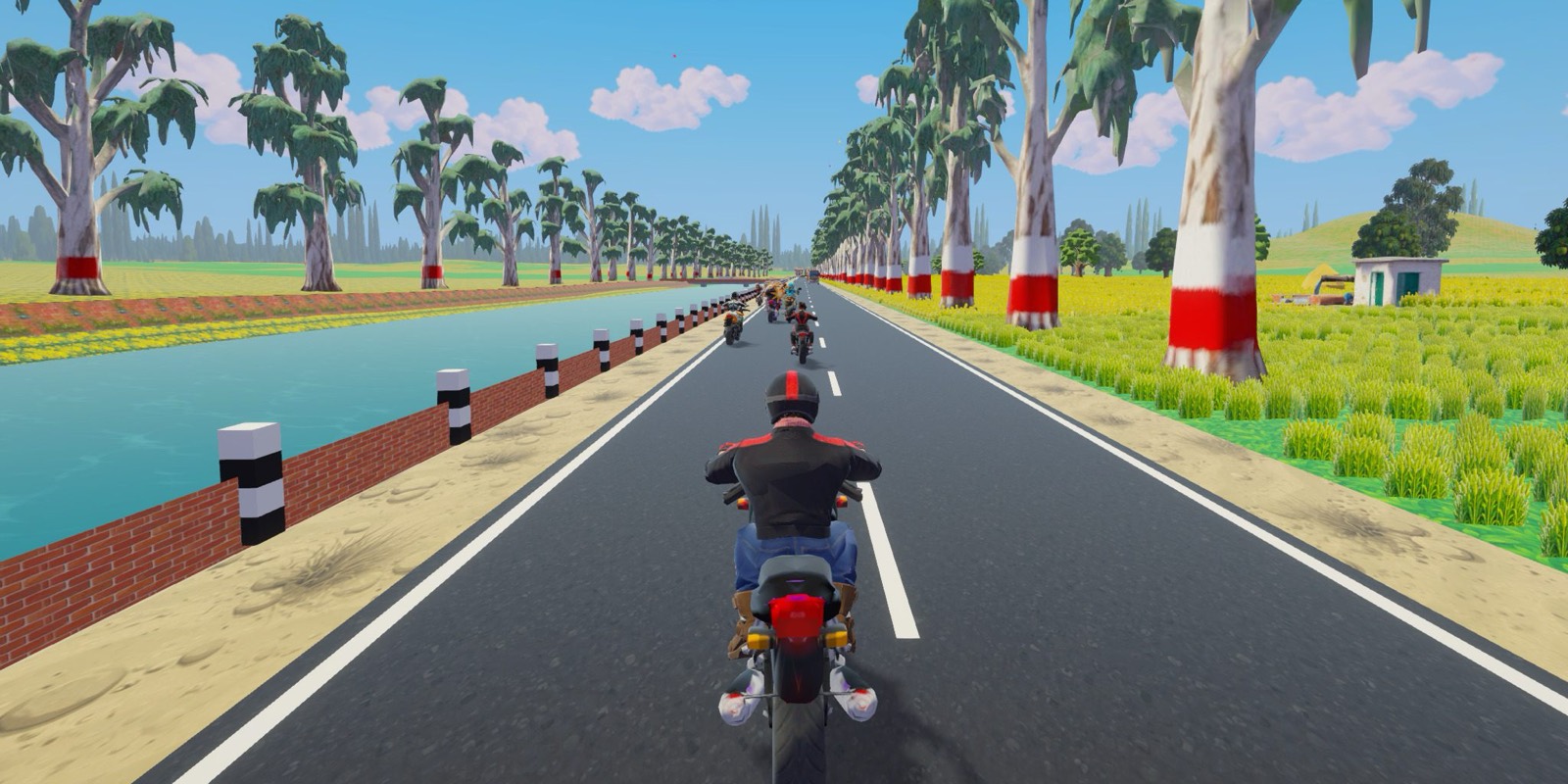
In Sadak Fury, traffic going your way keeps to the left lane, and oncoming traffic is on the right, just like the real highways. Rivals, police and every AI rider follow the same habits: they keep left, and they overtake on the right only when the gap is clear.
It sounds obvious, but it took real work. For a while the left lane was strangely empty, because traffic going your way was held back whenever a rival was anywhere near it, which starved the lane. Now it only waits when a rival is right on top of it, and the left lane is as busy as it should be.
Every state has its own traffic
Buses, autos, cars, vans and lorries appear everywhere, and each state adds its own:
- Kerala: fish carts, state buses, lorries painted HORN OK PLEASE, and jeeps up near Munnar.
- Rajasthan: cycle rickshaws in the Pink City, tractor-trolleys and painted lorries on the highway.
- Maharashtra: black-and-yellow taxis and red double-deckers in Mumbai, with no autos in the south of the city, as in real life, and cane tractors and bullock carts out in the Deccan.
- West Bengal: yellow taxis, trams on their rails, totos (e-rickshaws) and cycle-vans.
- Punjab: jugaads, tractor-trolleys and a convoy of combine harvesters.
If a vehicle comes between you and the camera, it turns see-through for a moment, so you never lose sight of the road. Riders never do.
Herds on the road
Animals are part of every Indian road. Cows, goats, dogs, yaks and camels stand at the roadside in the right states. Some herds come right onto the tarmac: elephants in the cardamom forest of Kerala's Plantation Run and in West Bengal's sal forest, buffaloes on Punjab's canal roads.
When a herd is on the road ahead, a warning appears, such as ELEPHANTS AHEAD! or BUFFALOES AHEAD!, and the animals stand across the carriageway as you arrive. Getting that right took a fix. In an early version the warning flashed while the herd waited 15 m off the road behind some banana plants. Now the warning only appears when an animal is actually on the tarmac.
Rivals who respect a bus
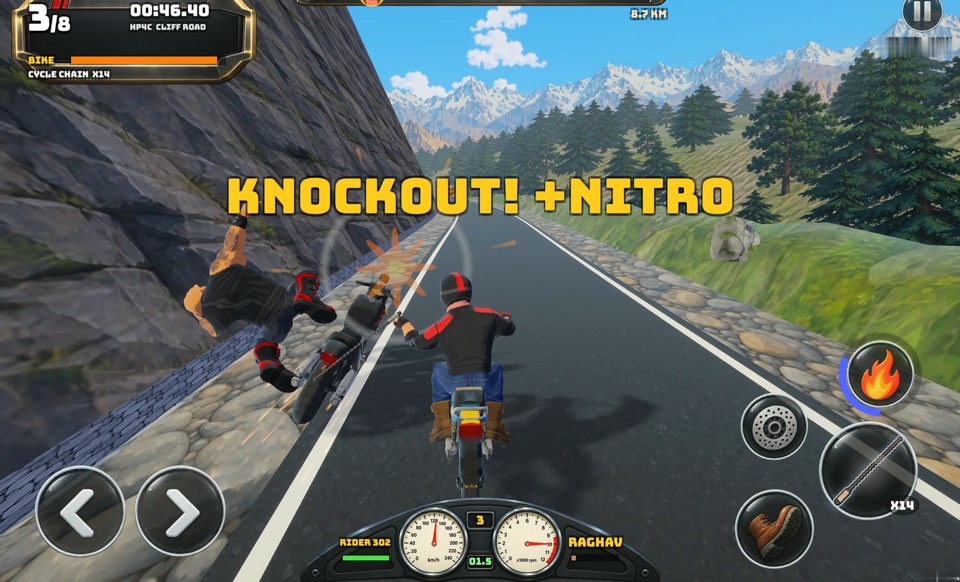
Fights and two-way traffic don't always mix. In early tests, rivals locked in a fight could forget the road and ride straight into an oncoming bus. Now rivals in a fight predict where oncoming traffic will be. They pick a side in time, keep it, and brake hard if they have to, and they no longer kick each other into oncoming traffic.
They still make mistakes sometimes, just like real riders. But now they're mistakes, not blind spots.
The rules of the crossing
At level crossings, riders, rivals and police wait for the train or the tram, and nobody waiting can fight or be arrested. Then the road clears and everyone launches at once. You can read more in twelve new roads.
People by the road
Sadak Fury's roads have people on them, not just cars. Villagers walk the verges in groups, and every start and finish has a cheering crowd behind the banners.
They also have to walk in sensible places. A few early walkers wandered onto rock cuttings, up steep banks or into a riverbed. Now every walker stays on ground a real person would walk on.
Solid roadsides
Trees, poles, buildings, stalls, parked vehicles and rocks are solid. If you ride into them, you crash. It makes the roadside part of the race: a kick that sends a rival towards a row of stalls means something.
Humour, never at anyone's expense
Indian roads are funny, and so is Sadak Fury: cows judging you, a rider flopping into a paddy field, a showman filming his own crash. We follow one rule for that humour: it comes from character, never from region, religion or body. The joke is always the situation, never who someone is.
If you want to see the road life in motion, the screenshots on the home page are all from the game.